Short answer: A coding agent is an AI tool that takes a coding task, reads the relevant code, decides which files to change, edits them and runs commands such as builds or tests, then hands back a diff or pull request for a developer to review. It works on one task inside a codebase at a time.
You've seen autocomplete become an agent in a short span of releases. The word now covers a terminal tool, an IDE mode and a bot that opens pull requests. Knowing the boundary helps you decide what the agent owns and what still needs a person.
In this guide, you'll learn:
Definition first, then context.
What a coding agent does
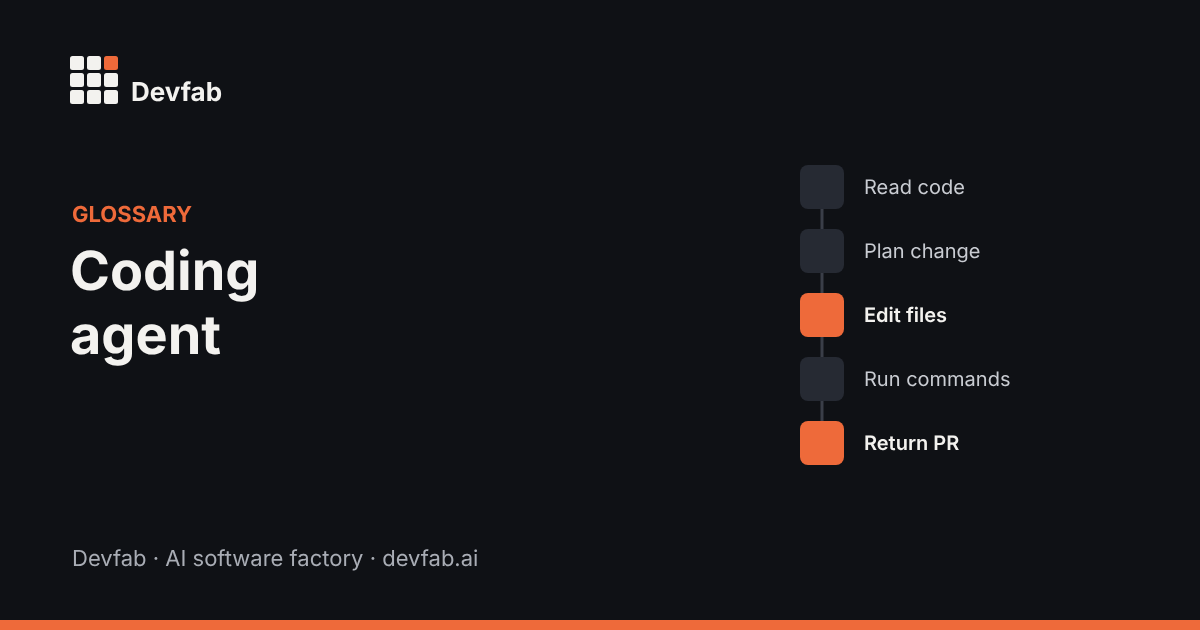
A coding agent works in a loop: read the code, plan a change, edit files, run a command, look at the result, repeat. Two well-known examples:
- Claude Code reads a codebase, edits files, runs commands and opens pull requests, and runs in the terminal, IDEs, a desktop app and the browser. Its plan mode explores the code and proposes an approach for approval before editing.
- GitHub Copilot's cloud agent takes assigned work and opens pull requests. It runs in a GitHub Actions-based environment or a cloud sandbox, "rather than your local IDE," and can research a repository and create an implementation plan first.
On its own, a coding agent does not decide what the product should be, research the domain or split a large project into tickets.
Example from a real run (Devfab)
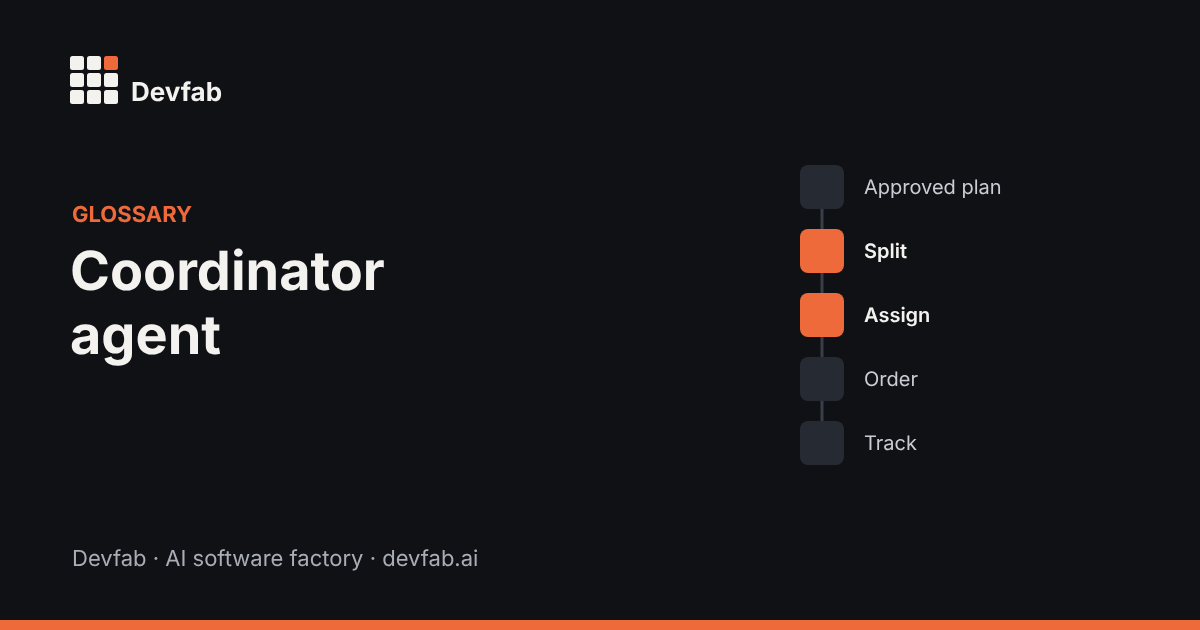
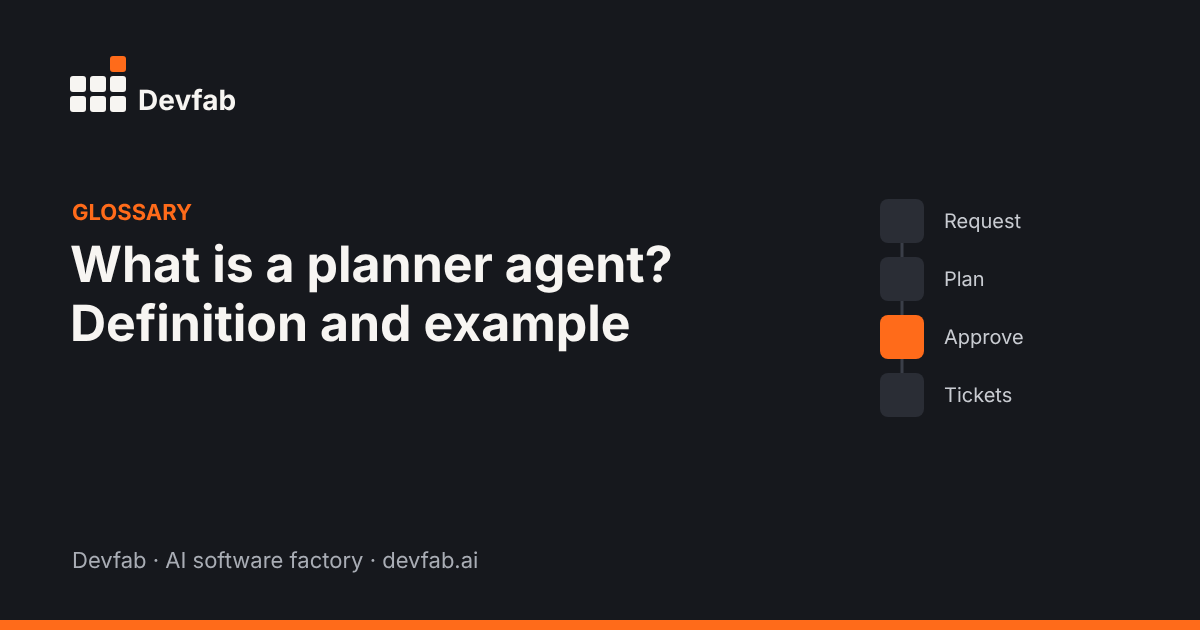
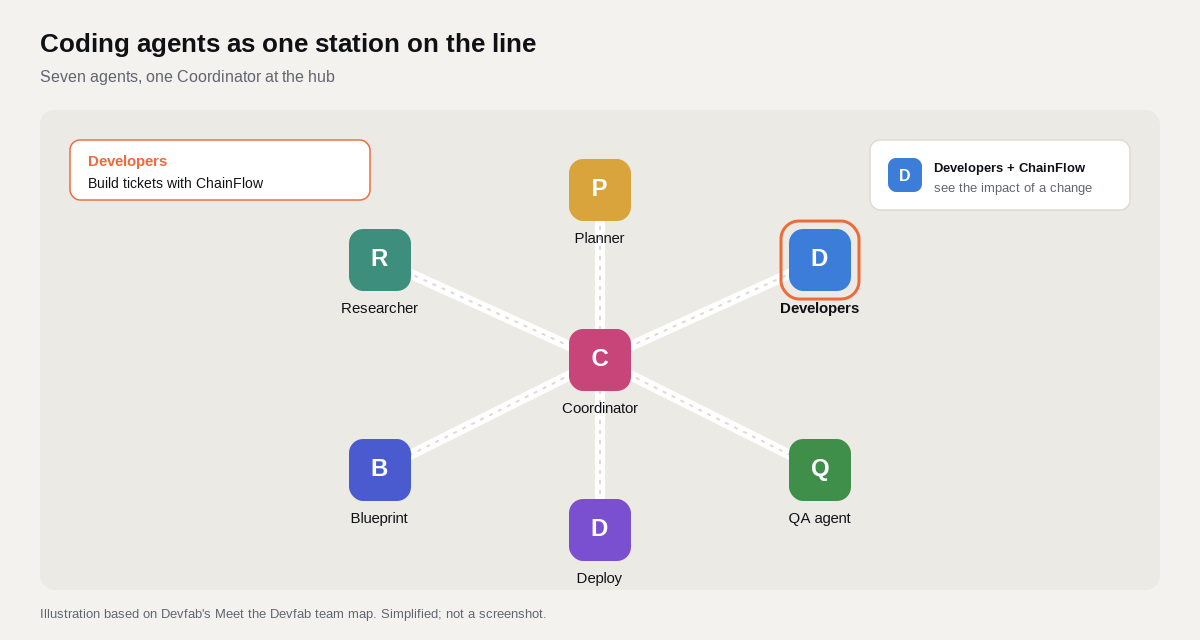
Devfab uses coding agents as one station on a line. It calls them Developers. Before they start, the Researcher maps the domain and the Planner writes a plan that a person approves. The Coordinator then turns the plan into tickets and assigns each one to a developer agent.
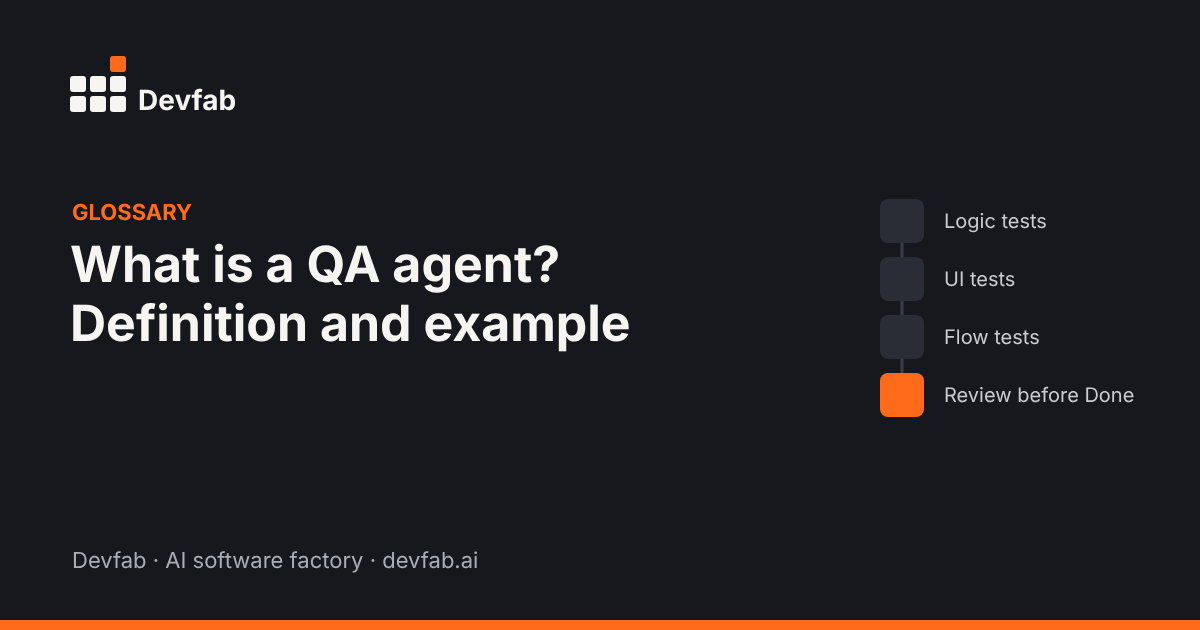
Developers work with ChainFlow, which maps which functions and APIs call each other and what is deployed. A developer changing checkout can see that payments, inventory, order confirmation and notifications are connected. The QA agent then runs UI and flow tests plus logic tests on the result.
Coding agents automate the developer. Devfab automates the development lifecycle.
Related terms
FAQ
What is the difference between a coding assistant and a coding agent?
An assistant suggests code while a developer types or chats. An agent takes a whole task, changes several files, runs commands and returns a finished change for review. Many products now offer both modes.
Is a coding agent the same as an AI software factory?
No. A coding agent works on one task in a codebase. An AI software factory runs the lifecycle around many tasks: research, a plan a person approves, tickets, build, QA and deploy. Coding agents automate the developer. Devfab automates the development lifecycle.
Do coding agents need human review?
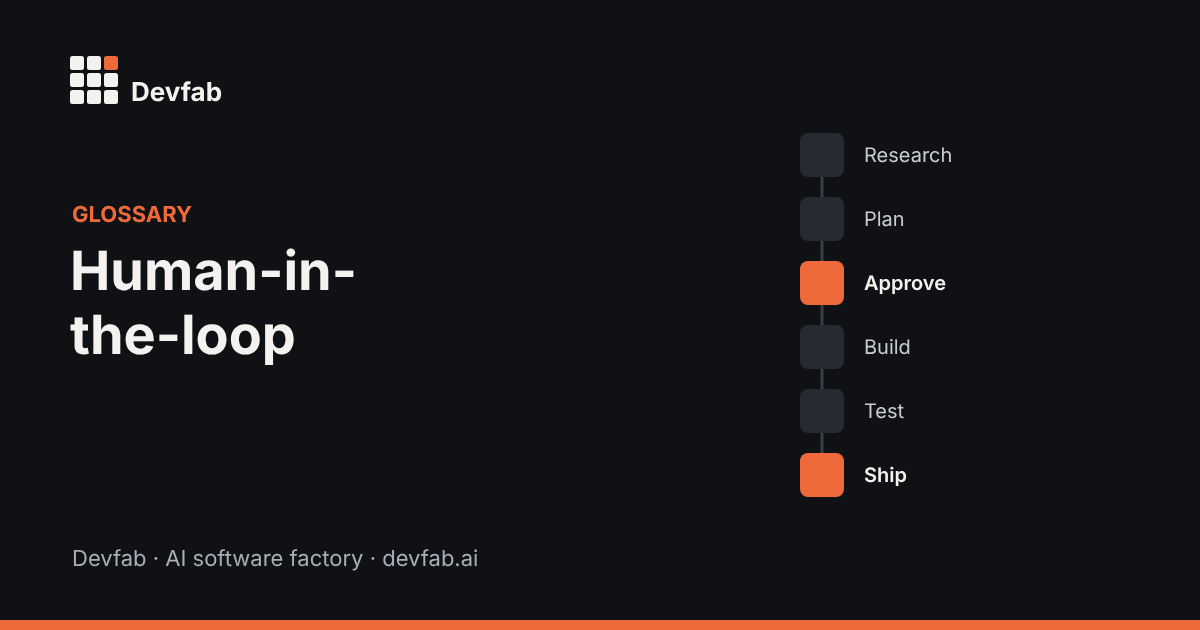
Yes. The agent's output is a proposed change. A developer still reviews the diff or pull request, and someone still decides what the task should be in the first place.
Read next
- What is an AI software factory?
- AI software factory vs AI coding tools
- AI pair programmer vs autonomous coding agent
Devfab is in Beta. See developer agents work from a plan you approved. Try Beta
Sources (checked November 2026): Claude Code overview; Claude Code costs and plan mode; About GitHub Copilot cloud agent; GitHub Copilot features.
Frequently asked questions
What is the difference between a coding assistant and a coding agent?
An assistant suggests code while a developer types or chats. An agent takes a whole task, changes several files, runs commands and returns a finished change for review. Many products now offer both modes.
Is a coding agent the same as an AI software factory?
No. A coding agent works on one task in a codebase. An AI software factory runs the lifecycle around many tasks: research, a plan a person approves, tickets, build, QA and deploy. Coding agents automate the developer. Devfab automates the development lifecycle.
Do coding agents need human review?
Yes. The agent's output is a proposed change. A developer still reviews the diff or pull request, and someone still decides what the task should be in the first place.