Short answer: Human-in-the-loop (HITL) is a way of running an AI system where a person reviews, corrects or approves its work at set points before it continues. The AI does the work between checkpoints. The person owns the decisions at them, such as approving a plan, accepting a result or choosing what ships.
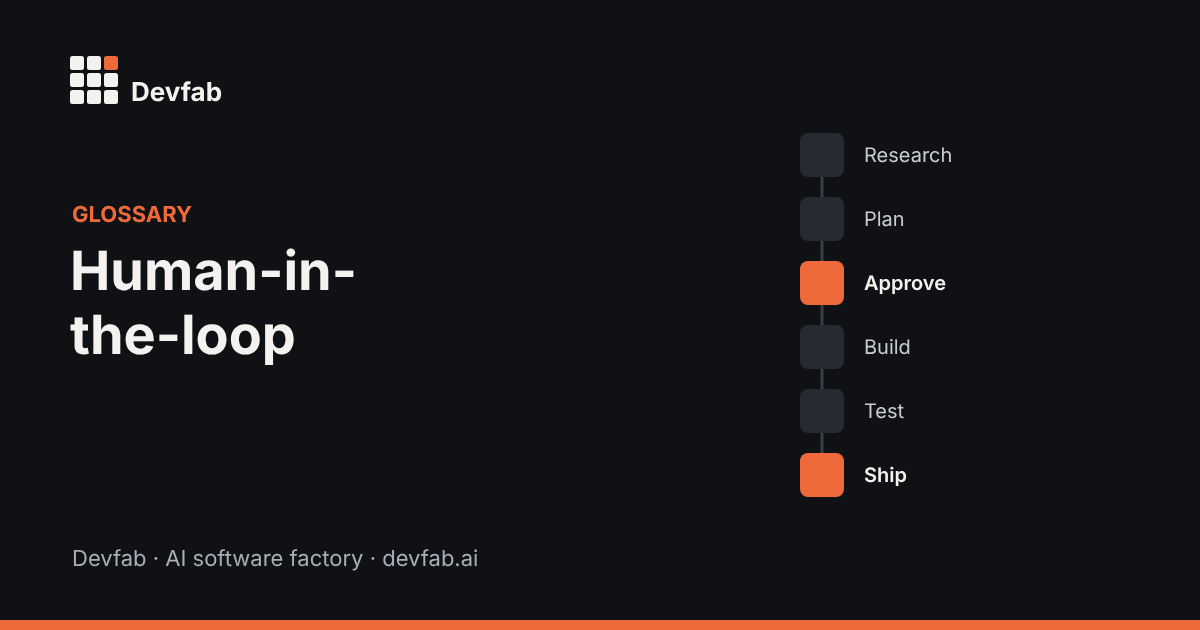
You want AI to do the work, but you still answer for the result. Human-in-the-loop is how those two fit together. The question is not whether a person is involved. It is where the checkpoints sit.
In this guide, you'll learn:
The idea is simple. Placing the checkpoints well is the hard part.
Where the checkpoints go
The term started in machine learning, where people label or correct data so a model learns. In AI agents it means something more practical: the agent stops and waits.
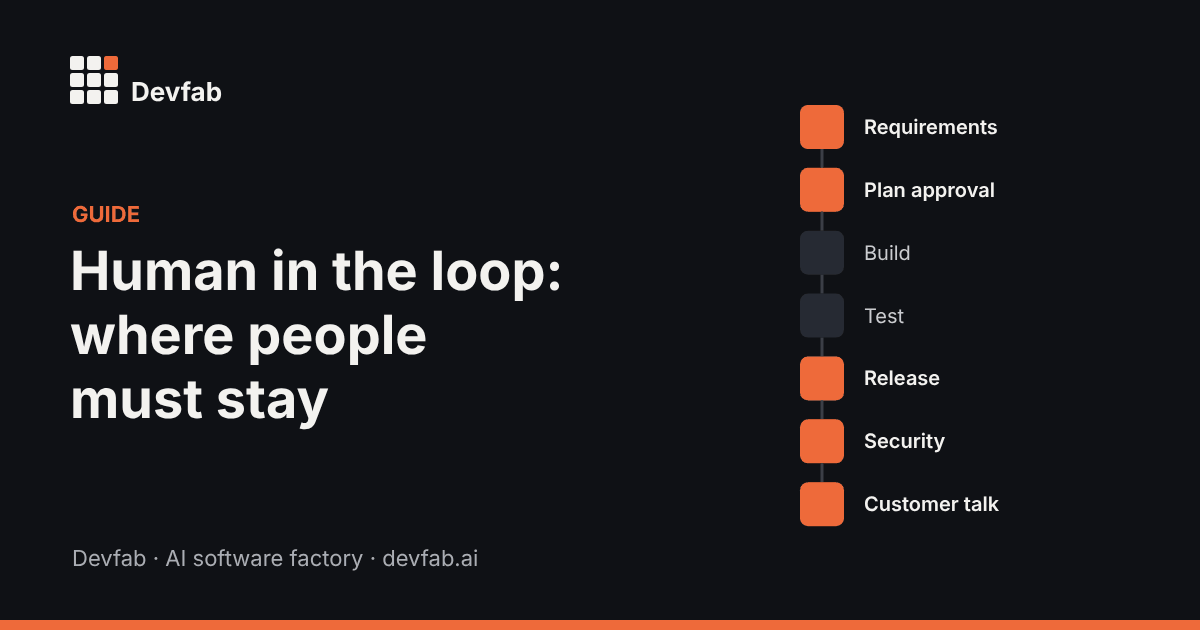
Good checkpoints sit where a wrong call is expensive to undo:
- Before work starts: is this the right plan?
- Before work is accepted: does the result do what was asked?
- Before release: should real users get this now?
Too few checkpoints, and errors pile up unseen. Too many, and people approve without reading. Put a person where their judgment changes the outcome.
Example from a real run (Devfab)
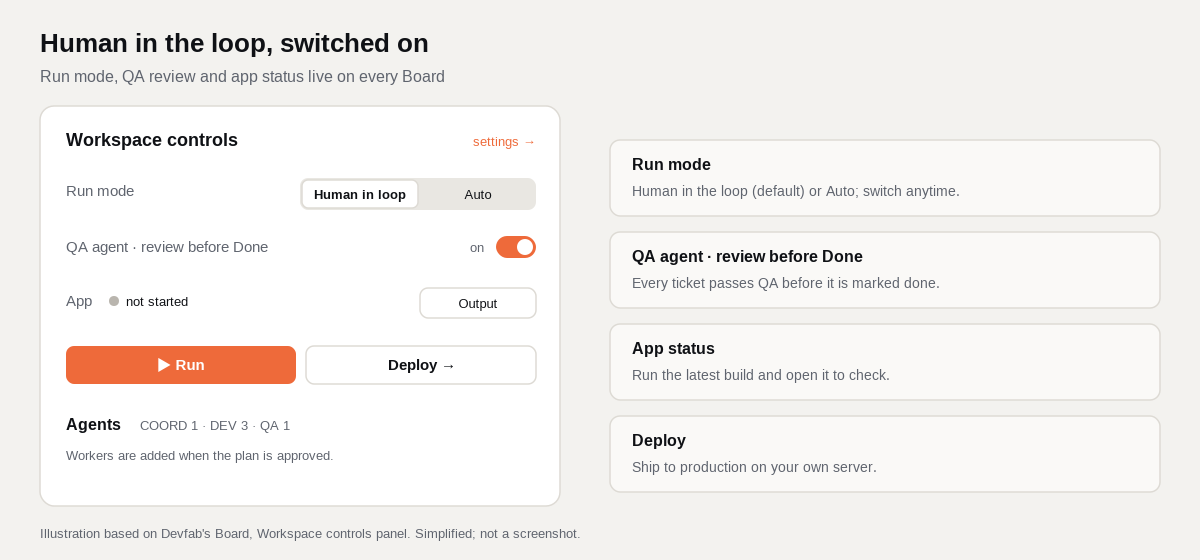
When you start a project in Devfab, "How should Devfab work?" offers two modes. Human in the loop is the default: step by step, with your review and approval before the next stage. Auto handles the process and asks only when needed. You can switch modes anytime in workspace settings.
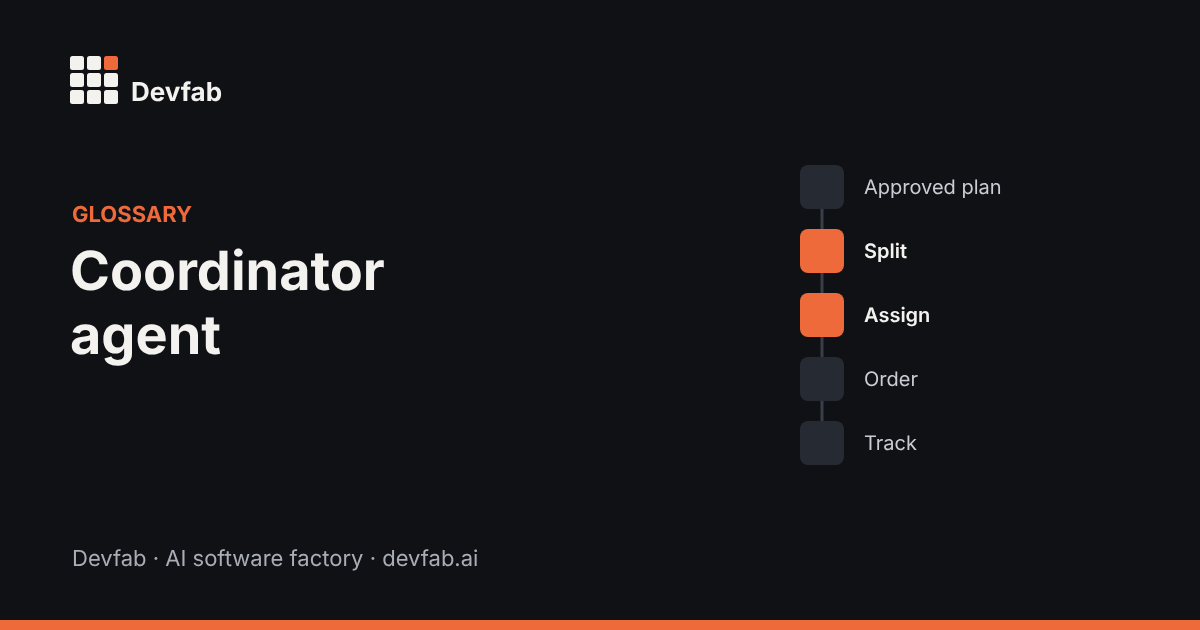
In Human in the loop mode, the Researcher maps the domain and the Planner writes the plan. Then the board shows "Your turn" and waits. A person approves the plan, and only then does the Coordinator create tickets. Later, the workspace switch "QA agent · review before Done" means the QA agent checks each ticket before it closes, and deploy happens when you choose to ship to production.
Related terms
FAQ
Is human-in-the-loop slower than full automation?
It adds a pause at each checkpoint. The trade is that mistakes are caught when they are cheap: a wrong assumption in a plan costs far less to fix than the same mistake in finished code.
What is the difference between human-in-the-loop and human-on-the-loop?
In the loop, the system waits for a person at each checkpoint. On the loop, the system keeps going and a person watches and steps in when needed. Devfab's Auto mode is closer to the second: it handles the process and asks only when needed.
Who should be the human in the loop?
The person who knows the users and rules best for that checkpoint. For a plan, that is often a product owner or the client. For a release, it is whoever is accountable for what goes live.
Read next
- Human-in-the-loop software development: where people must stay
- How to review a plan written by an AI agent
- What is an AI software factory?
Devfab is in Beta. Try it with you approving every plan. Try Beta
Frequently asked questions
Is human-in-the-loop slower than full automation?
It adds a pause at each checkpoint. The trade is that mistakes are caught when they are cheap: a wrong assumption in a plan costs far less to fix than the same mistake in finished code.
What is the difference between human-in-the-loop and human-on-the-loop?
In the loop, the system waits for a person at each checkpoint. On the loop, the system keeps going and a person watches and steps in when needed. Devfab's Auto mode is closer to the second: it handles the process and asks only when needed.
Who should be the human in the loop?
The person who knows the users and rules best for that checkpoint. For a plan, that is often a product owner or the client. For a release, it is whoever is accountable for what goes live.